
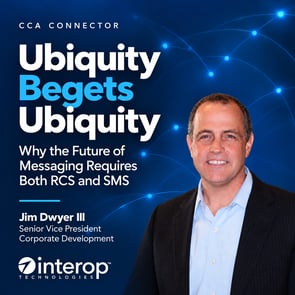
Why the Future of Messaging Requires Both RCS and SMS
Few communications technologies achieve true ubiquity. SMS did.
Its enduring value comes from a straightforward proposition: nearly every mobile user can be reached, regardless of device, operating system or network. That reach has made SMS an essential communications channel for consumers, enterprises and mobile operators alike.
RCS represents the next evolution of that experience. It gives businesses the ability to communicate through verified sender profiles, rich media, interactive content, suggested actions and two-way conversations. However, the long-term success of RCS will depend on more than the capabilities it offers.
Features may generate interest, but scale changes markets.
For RCS to influence how businesses invest in mobile messaging—and how consumers engage with those messages—it must become consistently available across the mobile ecosystem. The industry must, in effect, fight ubiquity with ubiquity.
 Scale Is a Strategic Requirement
RCS adoption is not simply a technology deployment decision. It is a market-development opportunity that depends on participation across operators, subscribers, devices and platforms.
Every operator that enables RCS expands the addressable audience for RCS Business Messaging. As that audience grows, brands gain greater confidence that their campaigns can achieve meaningful reach. That confidence encourages additional enterprise investment, supports more sophisticated use cases and strengthens the revenue opportunity for participating operators.
In late 2023, Google reported more than one billion monthly active users with RCS enabled in Google Messages. That scale is already taking shape. Infobip recently reported 169.3% growth in RCS for Business traffic from the first half of 2025 to the first half of 2026. In the United States, RCS interactions among its customers increased 1,298.8% year over year, with more than 1.5 billion RCS messages delivered in the country by late July 2026. These results indicate that brands are moving beyond experimentation and beginning to deploy RCS at meaningful scale.
Yet gaps in subscriber availability still introduce complexity for brands and aggregators, reduce campaign reach and slow broader adoption. Operators waiting for the RCS market to achieve full scale before participating may therefore delay the scale they are waiting to see.
Ubiquity is not a condition that will exist before operators act. It will be the result of operators acting.
Turning Capability Into Commercial Value
The strategic value of RCS becomes clearer when viewed through practical use cases.
A retailer can present products through branded rich cards, provide personalized recommendations and allow customers to complete an action directly from the the native messaging app. Financial institutions can send verified fraud alerts and give customers an immediate way to confirm a transaction or contact support. Airlines and hotels can combine confirmations, itinerary updates, check-in functions and upgrade offers within a continuous messaging experience.
Healthcare providers can streamline appointment reminders and prescription notifications, while utilities can deliver outage information, billing notices and service updates in a format that is recognizable and easy to navigate.
These examples represent more than a richer presentation layer. They reduce the distance between receiving a message and taking action. They can also give consumers greater confidence in the identity of the sender—an increasingly important consideration as businesses look for more trusted ways to engage their customers.
For operators, this creates an opportunity to remain central to the business messaging value chain as it grows. The objective is not simply to support a new messaging format. It is to help establish a trusted, scalable channel capable of generating sustained enterprise demand.
Read the full article on the CCA Connector online.